
Pre-listing shareholder lock-ins for 53 companies, valued at $11 billion, are set to expire between July and September, according to an analysis by Nuvama Institutional Equities, though not all shares are expected to flood the open market.

Indian equity markets experienced a significant downturn as geopolitical tensions in West Asia, rising oil prices, and foreign fund outflows dampened investor confidence. The Sensex and Nifty both fell sharply in early trade, reflecting broader global market weakness.

He alleged that besides Modi and Shah, Finance Minister Nirmala Sitharaman had also commented on the stock markets ahead of elections, which has never happened in the past.

Indian benchmark indices Sensex and Nifty rebounded sharply on Monday, driven by a correction in crude oil prices due to ceasefire efforts in West Asia and strong buying in bank stocks.

Dig into the prospectus. Use the prospectus to understand the business and its risks.
Indian stock markets, including the Sensex and Nifty, rebounded significantly, driven by a decline in crude oil prices and positive global cues stemming from hopes of diplomatic progress in US-Iran negotiations.

Indian stock markets experienced a second consecutive day of losses, with the Sensex tumbling 852 points, as crude oil prices surpassed USD 100 per barrel due to stalled US-Iran negotiations and escalating geopolitical tensions in West Asia.

Indian stock market indices closed on a mixed note, with the Sensex gaining 374 points driven by buying in Reliance Industries and ICICI Bank, while the Nifty remained flat. This divergence is attributed to a new Closing Auction Session (CAS) mechanism introduced by stock exchanges, impacting market liquidity and price discovery.

The Nifty 50 experienced significant volatility during its closing auction session, leading to losses for both long and short retail options traders due to thin liquidity and rapid price swings, particularly in private-sector banks.

The Reserve Bank of India (RBI) has rejected Tata Sons' application to surrender its non-banking finance company (NBFC) licence, a decision that mandates a public markets listing for the conglomerate's holding company as it is classified as an upper-layer NBFC.

Indian benchmark indices Sensex and Nifty closed higher, with the Sensex climbing 355.90 points, driven by positive state election results and better-than-expected Q4 earnings, despite ongoing geopolitical concerns.

Tempsens Instruments India has emerged as the strongest mainboard IPO debutant of calendar year 2026 so far, delivering a 95.55 per cent gain on its listing day, surpassing all previous top performers and contributing to August being the strongest month for listing gains this year.

HDFC Bank's share in active mutual fund schemes has fallen to multi-year lows, despite overall MF ownership in the bank rising, as the stock faces weak performance, soft margins, and governance concerns.

Jio Platforms Ltd, the digital services arm of Reliance Industries, has secured Sebi's final observation to launch an initial public offering (IPO) aiming to raise approximately USD 4 billion (Rs 37,700 crore), potentially making it the largest IPO in India's history.

Indian benchmark indices, Sensex and Nifty, closed lower, primarily due to a downturn in banking and financial stocks, coupled with crude oil prices remaining above USD 80 per barrel. Geopolitical uncertainties and new regulatory proposals for the non-bank lending sector also contributed to cautious investor sentiment.

Indian benchmark indices, Sensex and Nifty, experienced significant declines, with the Sensex falling 493 points and the Nifty dropping for the sixth consecutive day, primarily due to elevated crude oil prices reaching USD 91 per barrel and diminishing hopes for a diplomatic resolution in West Asia.

Equity investors are up for an eventful trading week ahead as the 90-day suspension period of the reciprocal tariffs announced by US President Donald Trump ends on July 9, analysts said, adding that a positive outcome from the trade negotiations could further lift market sentiment, particularly benefiting trade-sensitive sectors.

India's market regulator, Sebi, has approved the re-introduction of open-market share buybacks through stock exchanges, effective August 1, 2026, alongside easing debt listing norms for RBI-regulated entities and simplifying rules for mutual funds and alternative investment funds.

A former life insurance manager in Thane has been sentenced to two years in jail for defrauding people of over Rs 3.51 crore with false promises of high returns on stock market investments.

From the 30 Sensex pack, Hindustan Unilever fell by nearly 6 per cent after the FMCG major reported a 2.33 per cent decline in consolidated net profit at Rs 2,595 crore for the second quarter ended in September 2024 impacted by moderation in demand from the urban market.
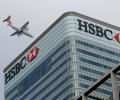
As India faces slowing economic growth, HSBC Global Research has downgraded the Indian stock market outlook from "overweight" to "neutral". In a report, the global financial services firm said profits at India Inc appeared to have softened while valuations are elevated. After annualized growth of 25 per cent in recent years, profits appear to have softened while valuations are elevated at 23x forward earnings.

'Once the market decides it wants to go up, it goes up -- no amount of bad news can really hold it back.'

The biggest bounce is in the realty sector, where the industry index jumped 80%. There's been a turnaround also in automobiles and ancillaries (up 45%). The pharma and health care indices have a welcome return of roughly 35%.

The Indian stock market is poised for a volatile week, influenced by the Reserve Bank of India's monetary policy decision, crucial global macroeconomic data, and the escalating geopolitical tensions in West Asia, according to market analysts.

A fall in the Nifty 50 to around 19,000 is not impossible, but that would likely require nuclear options to be exercised.

Futures and options (F&O) trading suits investors with good market knowledge, sufficient risk capital, a tested strategy and strong discipline.

'Mobius made EMs investable and India his most enduring belief.'

Indian benchmark indices, Sensex and Nifty, extended their winning streak for a fourth consecutive session, driven by a significant drop in crude oil prices following a peace deal between the US and Iran. This development has fuelled investor confidence and buying activity across the market.

Sebi cautions investors against fake notices demanding Securities Transaction Tax (STT) payments and warns about fraudsters posing as account handlers promising risk-free profits.

'Banking is the only sector that can see double-digit growth in FY27.'

Stock markets are likely to trade in a range-bound manner in a holiday-shortened week where trading activity of foreign investors, currency movement and global macroeconomic data announcements are expected to drive sentiments, analysts said. Several global markets may see subdued activity on account of Christmas and New Year holidays, an expert said.

After four consecutive months of withdrawals, Foreign Portfolio Investors (FPIs) injected Rs 20,200 crore into Indian equities in July, driven by attractive valuations, improving corporate earnings, and a more favourable global environment.

Indian stock market indices Sensex and Nifty experienced a significant decline, driven by rising crude oil prices, sustained foreign fund outflows, and selling pressure in major bank stocks.

Sensex plunges over 1,400 points and Nifty slips near 22,250 amid Trump's Iran threat, rising crude oil prices, and FII selling. Here are the key reasons behind today's market crash.

Indian stock markets are set to be influenced by ongoing developments in the US-Iran conflict, fluctuations in crude oil prices, and the latest quarterly earnings reports from major corporates, with foreign investor activity also playing a crucial role.
'A favourable base, last year's policy measures, the carryover impact of a good monsoon and improving earnings should all help.'

The grandfathering clause and set-off provisions can be used to reduce the tax payable on sale of bonus shares, says Arvind A Rao.

Equity markets will keenly track outcome of the US Federal Reserve policy meeting this week amid heightened expectations of an interest rate cut along with WPI inflation data, analysts said. Any further development on the USndia trade front would also drive trends in the equity market, experts said.

Liquidity stress in smallcap funds has fallen to its lowest level since February 2024, with the average time to liquidate 50% of portfolios dropping to 27 days in June from a peak of 44.2 days in January 2026, driven by a sharp recovery in smallcap stocks and increased trading volumes.
Indian benchmark stock indices, Sensex and Nifty, closed nearly 1 per cent lower following the collapse of US-Iran negotiations, which heightened concerns of a prolonged conflict in West Asia and drove crude oil prices sharply higher.
